Field notes
23Published articles connected to developer experience, engineering quality, testing, and automation.
Developer Experience
Developer experience is the quality of the system around software delivery: how clearly people can understand, change, verify, release, and recover the product. The goal is not more tooling. It is less avoidable friction and more trustworthy feedback.
Published articles connected to developer experience, engineering quality, testing, and automation.
Release lead-time reduction achieved by improving CI/CD pipelines and automating quality gates.
Building software products, delivery systems, and engineering practices across teams and platforms.
Working definition
The useful version of DX connects a recurring team problem to a measurable delivery outcome.
Good developer experience makes the correct path easier to discover, the risky path easier to detect, and failures easier to recover from. It combines architecture, documentation, tooling, tests, release processes, and team agreements into one coherent feedback system.
That means measuring outcomes instead of counting tools. Faster feedback matters when it reduces waiting. Automation matters when it removes repeated work. Standards matter when they help people make decisions without guessing what “good” means.
Operating model
Four practices keep developer-experience work tied to product delivery instead of turning it into a collection of disconnected tools.
Field guides
Start with measurement and standards, then follow the implementation paths through linting, testing, automation, and AI-assisted delivery.
Measure developer experience with cycle time, feedback speed, onboarding time, recovery time, and tooling interruptions. Start with a baseline.
What separates ESLint configurations that spread across a codebase from ones that get removed after the first sprint.
AI speeds up code changes, but ESLint, tests, snapshots, and end-to-end checks are what keep probabilistic output from turning into production risk.
How I built a native CLI that coordinates existing analyzers across Rust, Swift, Android, Kotlin, JavaScript, and Astro without flattening their ecosystem-specific strengths.
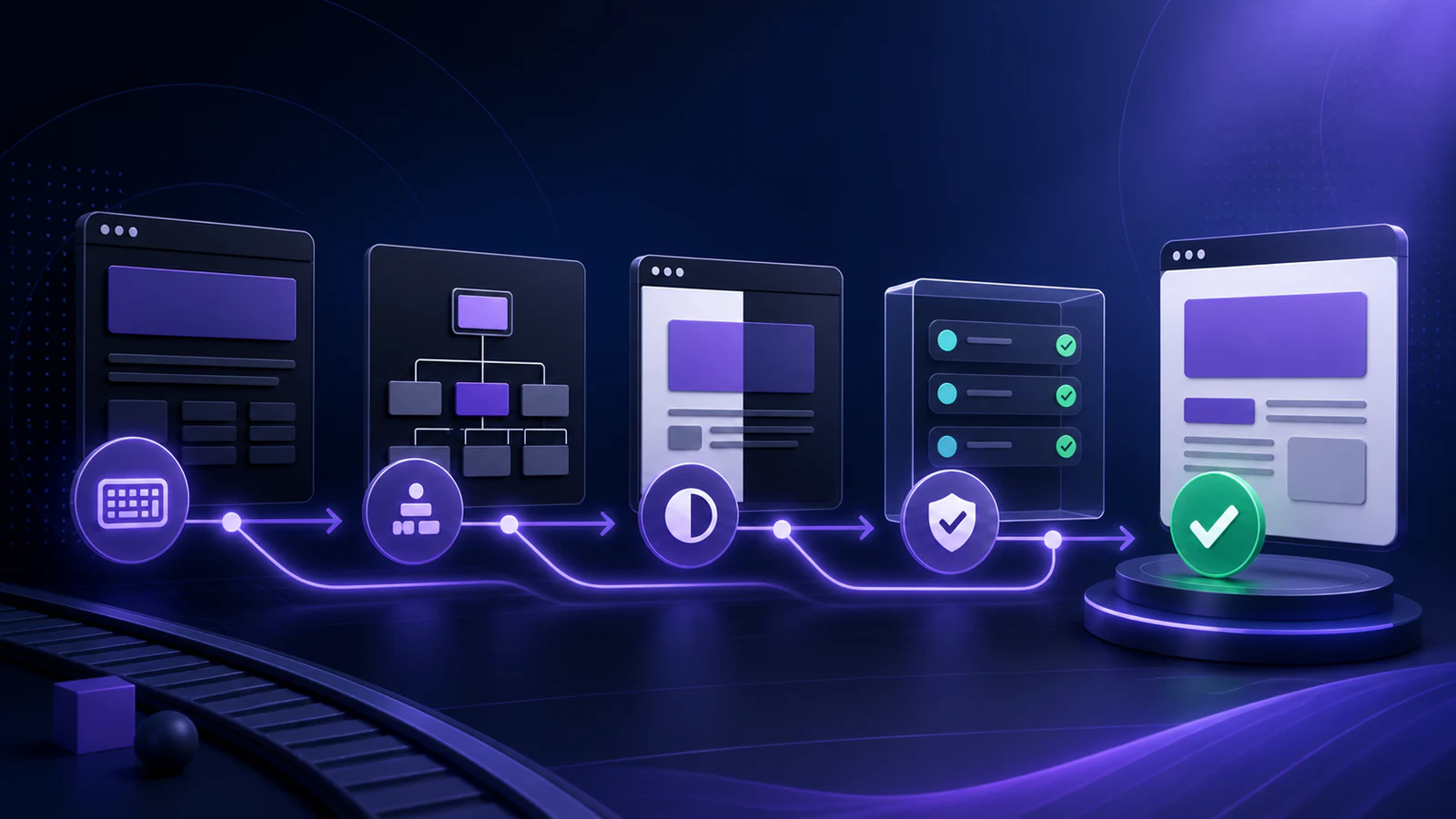
How to add accessibility automation to your Playwright suite in a way that is fast enough to stay in the workflow and specific enough to actually catch problems.
AI agents rerun checks constantly. Quiet logs, compact reporters, and parallel verification reduce token waste without lowering the quality bar.
Shipped systems
The portfolio shows how these ideas become products, rules, editor feedback, documentation, and reusable component systems.